
Ilse
A Vignette

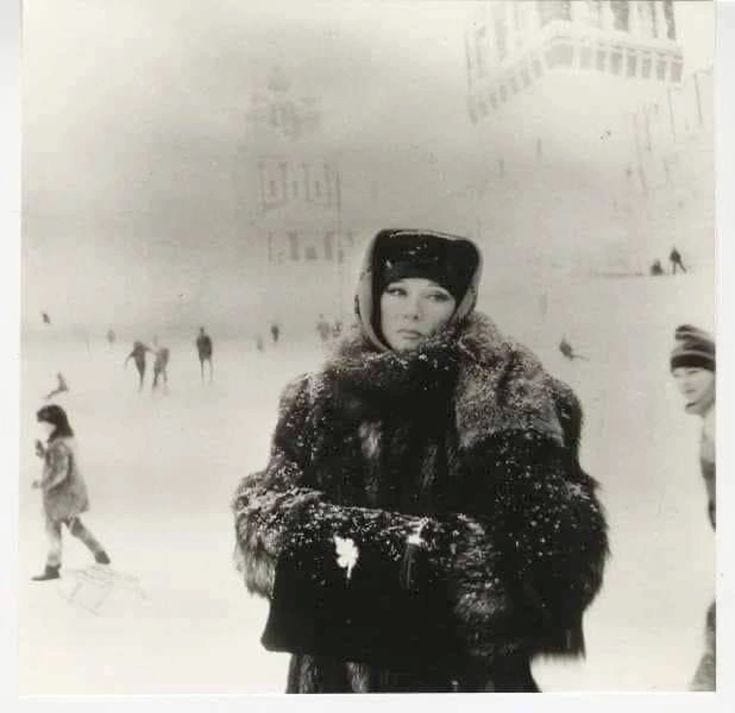
Ilse watched sleepy-eyed as the sun draped veils of amber over the shimmering snow beyond the frost-fuzzed window. The train jostled her along, rollicking nonethewiser through fields frozen beneath a layer of bible-thick ice, stilled almost unto death. All the world had receded, leaving only a barren stage set of snow-tipped silver firs and an impenetrable blue sky, as hard and unforgiving as the jab of an elbow into the softest part of the stomach. Ilse wondered if the trees felt abandoned, too, or if they thrived in their wild solitude. She had never been away from her family before, nor had she ever been very far from the spired skyline of Munich, where heavy-hooved Warmbloods tugged carts and carriages over cobblestone and fire-warmed voices warbled drunken folk-songs in crowded beerhalls.
‘It’s better this way,’ Hilda said over the twinkling of her knitting needles. ‘In a year, this will all be forgotten.’
Ilse said nothing. She watched Hilda’s needles fly and wondered if they were sharp enough to puncture skin. A ball of brown yarn sat like an egg in the nest of the old woman’s lap. Her frumpy frock swallowed her barren body beneath its woolen folds - a body built of flesh like whithered parchment and blue veins addled with dust. Hilda’s hands were those of a working woman, thick and weighty as two slabs of raw meat. She fumbled with her needles, forcing them to dance a clunky minuet.
Would Ilse ever dance a minuet again? Or would she be resigned to the fates of widows and wives, sitting stately in a forgotten corner behind a curtain of dust, discussing the flimsiest of subjects, bound and tethered as the world continues to ebb and flow around them, as a river pummels over an inconsequential rock. Perhaps she’d end up like Hilda, relegated to servants’ quarters and kitchens and back entrances, an old maid bound to duty.
‘Yes, all will be forgotten,’ Hilda said. ‘You’ll be quite new. The fresh air and quiet should work wonders.’
Ilse chewed at the skin around her nail. ‘Has anyone told him?’ she asked quietly.
‘Told whom?’ Hilda did not look up from her knitting. The needles snapped against one another.
‘Fritz.’
‘Oh, goodness, no!’ Hilda laughed. ‘Of course not. Your father made sure of that. Yes, you have nothing to fret over, dear. Everything is well taken care of.’
‘But hasn’t he a right to know?’
Hilda’s laughter echoed in the drafty corners of the cabin as her expression stiffened into one of somberness. ‘No,’ said. ‘It would only cause heartache. It’s better this way. Much better.’
Ilse bit again at her nailbed. The metallic taste of blood tickled her tongue.
‘Better,’ she said, taking her fingers from her mouth and watching as her blood curled along her cuticle. ‘I see. And what of Freya? Will anyone tell her?’
‘Your sister will be hardly the wiser.’
‘I suppose that’s just as well,’ Ilse said. She said nothing more for a long while, sampling a taste of the doomed silence of secrecy to which she would soon be damned. ‘Will they let me write to her?’ she asked after a moment.
Hilda shrugged. Ilse counted the wiry white hairs infesting the old woman’s scalp, sprouting like weeds in a field of frizzy chestnut hair. She stuck her bleeding finger into her mouth like a pacifier.
‘Perhaps not directly,’ Hilda said. ‘The family fears your influence, my dear. I’m afraid you’ve done away with any good graces. It might be best not to write at all - it will be too taxing. I’m sure your mother will want to hear from you, but I’d advise you to limit your correspondences to her alone. You must have peace of mind and rest. It will all be done before you know it.’
‘Did you ever…?’ Ilse asked.
‘Goodness, no.’
‘Oh.’
Hilda paused her needles. She reached across the compartment and placed a hand on Ilse’s knee.
‘Let us not speak of it any more,’ she said, smiling in a way that made her blue eyes crinkle. The warmth of her hand passed through Ilse’s skirts, as solid as an anchor. Ilse nodded and continued to worry at her reddened finger. The pain was almost welcome. Satisfied, Hilda leaned back in her seat and took up her knitting once more.
Ilse reached half-heartedly into her purse for the novel she’d been pretending to read for days. She had stared at the same page so often that she had memorized the words, though they meant nothing to her. They served merely as an ocean upon which she could float listlessly, caught up in her own story. The yellowed pages were comforting in the familiar way they fit into her hands - the worn corner on the back cover greeted her fingers like an old friend. Ilse knew nothing of what was unfolding on the pages. She simply parted them and slipped into reverie. Maybe one day she would read it.
Ilse hoped to get a letter to Fritz once they arrived. Regardless of what Hilda might say, Ilse believed Fritz had a right to know the truth, even if he could do nothing more than bear witness to it. No, he could not alter the truth, nor could he rewrite the past - but he ought to at least be aware that the very instrument of his life was being used to play a song he’d never heard.
Ilse watched the firs flicker by, their stout bodies dusted with snow. They sat glimmering like sugar-dusted treats in a bake-shop window, lined one after the other. They stood solid, braced against the future, wild and untamed, with their arms intertwined. Nature’s needle-tipped army, standing shoulder to shoulder, an impenetrable wall. They would not fling one of their own to the wolves, would not exile a sapling from their family masses as men do. Ilse was shuttling toward doom; she was certain of it. Darkness hovered on the horizon. It would swallow her up and stain the pages of her life as easily as spilled ink.
Her family had sent her away. Ilse could hardly reconcile this act of betrayal with the family she loved so dearly. She could not imagine her mother - the doting, divine woman she was - sealing her daughter’s fate with such swift cruelty. She could not believe her father would turn so callously from his little girl, his firstborn, without so much as a quiver of the lip or a teary-eyed goodbye. They had not seen her to the train station. They had sent her off with Hilda, the one housemaid they were willing to spare, for she was aging and careless and rather opinionated for a servant.
The carriage had come for Ilse before dawn had broken. She was forced to kiss her sister goodbye with a false air of exuberance. Ilse was going abroad, their parents had said. Cousin Ingrid had invited Ilse to spend a year in Vienna. Freya was morbidly jealous. She stood shivering at the gate in only her nightgown and a wool blanket wrapped around her shoulders. Her little flowerbud of a nose bloomed red in the cold, while icicles dripped gradually from the awnings and eaves and puddles of slush clogged the cobblestone streets. Freya’s breath hung like white clouds in the darkness.
‘You must write to me every day,’ Freya whispered breathlessly as Hilda loaded the carriage. ‘I want to feel as though I’m there, too. I want to know every detail. I’m eternally jealous that Ingrid asked only you.’
Ilse swallowed the truth like cough syrup. It made her lips pucker.
‘It will be your turn, soon,’ she said. Gaslight flared to life in the house across the way and tossed squares of warmth on Freya’s face. Her cheeks pinkened.
‘Still, I wish we could go together,’ Freya said. She looked up at her elder sister. ‘Are you sure you wouldn’t like me to wake mother and father? It’s rather strange, them not seeing you off.’
‘No. It’s much too early. Besides, they said goodbye last night.’
‘But I should still think mother would want to ride with you to the station.’
‘It’s better this way.’
‘I’ll miss you very much, you know. By the time you come back, I might be an entirely different person. Fifteen is an awfully grown-up age. You might not recognize me.’
Ilse willed the tears away from her eyes. ‘Yes,’ she said. ‘You’ll be much changed. Perhaps I will be, too.’
The horses’ harnesses rattled - their breaths poured forth like steam from a kettle. Hilda loaded the last of the bags, and the coachman took up his whip. Ilse removed her hands from her silver muff and drew her sister in for an embrace.
‘You needn’t squeeze so tight,’ Freya said. ‘It’s not forever, only a year.’
‘It might as well be forever.’ Ilse placed one foot on the carriage step and glanced back at her sister. ‘You’ll tell Fritz where I’ve gone?’ she asked. Her wide eyes were pallid in the cool blue hours of a sleepless night.
‘Yes. He’ll be very jealous, too, you know. What if you fall in love with some Austrian Duke?’
Ilse shook her head. The silvery hair by her face scintillated in the waning moonlight. She adjusted her fur cap.
‘I won’t,’ she said and climbed into the carriage.
Freya watched her sister go, dashing alongside the carriage until she could no longer keep up, and Ilse, weeping in the darkness, vanished around the corner, supposedly off to grand adventures and great unknowns.
Ilse set down her book and checked her watch. Freya must have told Fritz by now. She wondered how he had taken the news. She imagined his auburn eyebrows shooting up behind the thistly forelocks of his hair, his long fingers wriggling at his sides as they were wont to do when he did not know what to say, as though combing through the ether for the right phrase. He was selective with his words. His letters seemed to burn a hole in Ilse’s coat pocket. She patted them, satisfied to hear the pages crinkle, to know his spellbinding words were within reach. That was all she had left of him, now.
The second hand jerked forward as though by force. It moved reluctantly into an unwanted future that was quickly becoming a torturous present. Hilda melted into the seat cushions; her thick ankles peered out from the hem of her wool skirt.
‘I don’t want to do it,’ Ilse said suddenly.
Hilda looked up from her knitting. ‘Don’t be ridiculous, dear. What other choice is there?’
Ilse glanced again at her watch, at the wiry little second hand persisting ever forth, pushing on and on into the unknown, into moments which had never been before.
‘I don’t know,’ Ilse said. ‘But I’ll find out.’
‘Don’t be a fool, Ilse. You need not throw away your life over trifles such as this.’
‘It’s no trifle - it’s my life. Mine, the baby’s, and Fritz’s, too. I won’t be sent away and shut up in the country for a year, and I won’t give my baby away like an old frock. No one can make me.’
Hilda opened her mouth to speak, but said nothing. The second hand pushed forward. The future unfolded into the present.
Absolutely wonderful! Your best piece yet ❤️
EXCELLENT!!!