
Televangelism
A Vignette

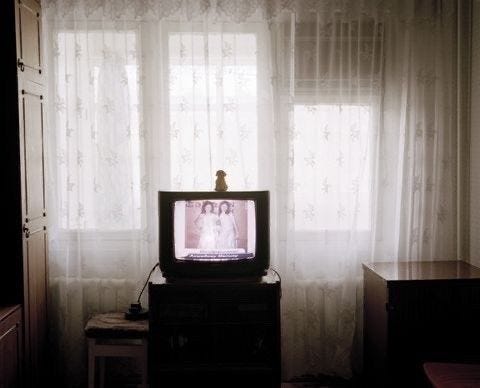
A graveyard of flies bakes on a dust-caked windowsill in Ratliff Manor. Translucent wings sift sunlight into veined fragments the way stained glass windows toss colored prisms onto sinners’ faces in church. A clock swings a pendulum like a brass thurible, sending out the sounds of seconds passing instead of the smoke of listless prayers. The wallpaper fades a solid, stolid yellow, the color of freshly churned butter still slick with buttermilk. It is peeling in places, doubling over, craning away from the empty walls as though in agony to tear itself away, to escape. Eula Mae wrestles with the television antennae. She maneuvers them with reddened hands until the flickering picture stills. The bakelite screen is warm to the touch and hisses faintly under the meandering voice of Father Raymond.
Eula Mae lives alone on her ancestral land, passed down to her through many hands. The Ratliff homestead decays on ground as thick and wet as chocolate pudding. Fudgy dirt suckles at one’s toes from beneath a blanket of velveteen grass, land too wet for any sensible use. It swallows seeds whole without having the decency to birth sprouts in return. It takes what it is given and buries it deep, hungry and ruthless as the sea. It swells against a colorless sky like a bloated belly, a body barren and beaten at the edges, scarred by muddy paths tattooed with the fossilized tracks of long-gone carriage wheels.
Not even the Manor can escape the tug of the land. Appearing to the naked eye a relic of some forgotten time, an antebellum headstone crumbling into an overgrown grave, it slumps like a drunkard, nodding sleepily under the weight of winds, swaying with belabored breaths under the pounding of Eula Mae’s feet. She keeps a shotgun by the door. It stands perpetual guard, obedient and bloodthirsty as a slobbering hound. Its silver barrel snarls in the moonlight.
Eula Mae pens letters from the living room floor and beats back ghosts of the past. On a dresser sits silver tintypes with blackened edges, a finger-worn Bible, tarnished brooches, and earbobs she suspects might be expensive. She wears her deceased grandmother’s calico dresses, buttoned to the neck and ruffled at the shoulders, and bleeds sweat into the cotton fibers while her bare feet sink into the cool mud and houseflies continue to die on the sill. Outside, the world turns, just out of reach.
Father Raymond says praying is the best thing a person can do. Prayers are imbued with healing magic. They are the most valuable way to serve mankind. He says prayers can be strengthened by donations, which may be sent to the address in Las Vegas that flashes in seductive letters on the television screen. Eula Mae writes it on an envelope and licks a stamp.
When it storms, homeless beggars come to the door seeking aid. They tremble in the refuge of the porch until Eula Mae thrusts her hungry shotgun at their noses and threatens to blow them clean off. Then she prays for their wayward souls. Sometimes they perish in the night, suffocated by swelling streams and mudslides. Then, Eula Mae knows her prayers have worked. They’ve been granted salvation and gone to be with the Lord. She pens another letter to Father Raymond.
Eula Mae watches reruns of Father Raymond’s sermons when his program isn’t live. She nestles close to the screen, her legs swallowed by calico, and shivers under the caress of his tender voice. Pray to God, for He is good and has blessed thee with life. He is the reason you exist.
Eula Mae traces the scuff marks in the floors, the divots that surpass her in age. The footpaths beaten into the wood by those who came before, the oily marks of the fingers which fashioned Eula Mae’s life from the sturdy clay of their own. Eula Mae will pray for their souls - how lucky they are to be in Paradise with the flies and the dead beggars and the Lord. She will stick her last dollar in an envelope and suck at the bones of last week’s chicken dinner. She will wrestle with the antennae and tune into Father Raymond’s sermon.
Magnificent!